递归写法的思路
递归的写法的思路是,拿到一个标准量,找到它对应的位置,然后调用函数自己去实现左边和右边的更小规模的排序。
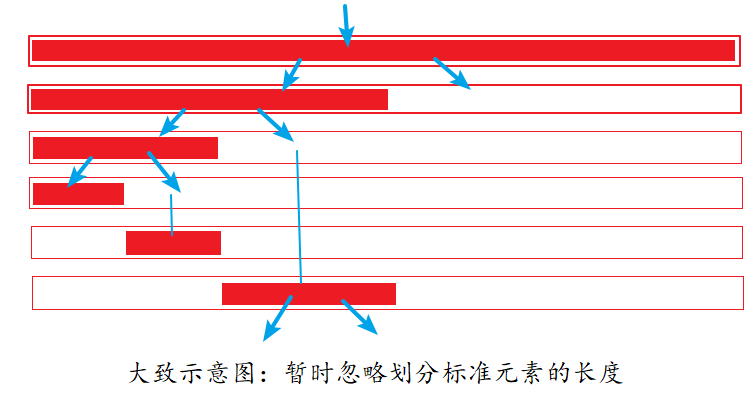
非递归写法
栈帧又称 过程活动记录 ,主要用于记录函数调用过程中的一些 局部变量和中间数据 。
递归调用在虚拟机栈中的实现也是不断压栈的操作,栈顶的栈帧是当前活动栈帧,如果再有调用,就继续压栈
那么我们能否使用栈这种数据结构来实现递归过程的模拟呢,答案是肯定的。
对于快排来讲,如上图来讲,每次选取的标准元素位置固定后,我们继续调用下个层次的,或者回溯到之前的层次,需要的仅仅是边界,知道左右边界,我们就知道如何处理,所以栈帧我们仅仅记录调用过程的左右边界即可
非递归代码如下:
1
2
3
4
5
6
7
8
9
10
11
12
13
14
15
16
17
18
19
20
21
22
23
24
25
26
27
28
29
30
31
32
33
34
35
36
37
38
39
40
41
42
43
44
45
46
47
48
49
50
51
52
53
54
55
| import java.util.Stack;
class StackFrame{
int left;
int right;
StackFrame(int left,int right){
this.left = left;
this.right = right;
}
}
public class QuickSort {
private Stack<StackFrame> stack;
public static void main(String[] args) {
int[] arr = {5,4,3,2,1,0,-1};
new QuickSort().quickSort(arr);
for (int i : arr) {
System.out.print(i+" ");
}
}
public void quickSort(int[] arr){
stack = new Stack<>();
int len = arr.length;
stack.add(new StackFrame(0,len-1));
while(!stack.isEmpty()){
StackFrame sf = stack.pop();
int left = sf.left;
int right = sf.right;
if(left>=right){
continue;
}
int p1 = left + 1;
int p2 = right;
while(p1<=p2){
if(arr[left]>=arr[p1]){
p1 ++;
}else{
swap(arr,p1,p2--);
}
}
swap(arr,left,p2);
stack.add(new StackFrame(left,p2-1));
stack.add(new StackFrame(p2+1,right));
}
}
private void swap(int[] arr,int i,int j){
int temp = arr[j];
arr[j] = arr[i];
arr[i] = temp;
}
}
|